
Kids & Caskets: How Decorating Can Help Children Process Grief

Updated: Mar 3
Talking to kids about death is not easy. When a loved one passes away, children can feel confused, overwhelmed, and unsure of how to express their emotions. One way to help them navigate grief is through creativity, and that’s where casket decorating comes in.
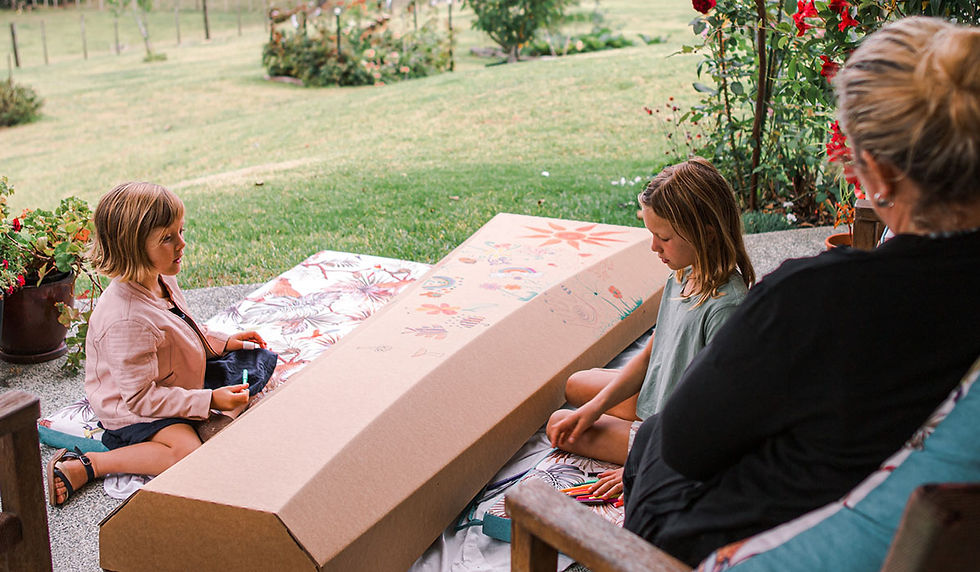
At Outside The Box Caskets, we’ve seen firsthand how getting children to take part in personalising a loved one’s casket can be a deeply healing experience. Whether it’s drawing pictures, writing messages, or painting something meaningful, this simple act can turn grief into a creative and comforting process. Research shows that art therapy can be incredibly beneficial for grieving children, giving them a tangible way to express emotions that are often difficult to put into words (Green, Karafa, & Wilson, 2020). Studies also suggest that when children are actively involved in funeral rituals, they experience a greater sense of closure and emotional understanding (Center for Loss, 2023).
Funerals can sometimes feel like a space designed for adults, leaving children on the sidelines, unsure of how to participate. But giving them an active role, something as simple as decorating the casket, can make a huge difference. It allows them to feel involved in the farewell, rather than just witnessing it from a distance. Experts say that these kinds of rituals provide children with a sense of comfort and help them process the reality of loss in a way that feels more natural (Callaghan Mortuary, 2024).
Art has always been a way for children to communicate when words fall short. Picking up a marker or a paintbrush often sparks important conversations, questions like, “Where is Grandpa now?” or “Do you think he’d like this?” These moments, while difficult, open the door for honest discussions about death in a way that feels less intimidating. When kids are encouraged to take part in the goodbye, they begin to understand that death, as sad as it is, is also a natural part of life.
For many children, the idea of someone being gone forever is hard to grasp. Creating something visible, like a decorated casket filled with messages, drawings, and symbols of love, helps make that loss more tangible. A handprint, a note, a small drawing, these things become a connection, something they can hold onto even after the funeral is over. Grief counsellors often talk about how these physical acts of remembrance help children process loss in a healthier way (Green et al., 2020).
There are so many ways to get kids involved in this process:
Markers & Crayons - Drawing pictures directly onto the casket.
Message Writing - Encourage them to write a note to their loved one, something they’d like to say one last time.
Handprints - Using non-toxic paint, kids can press their hands onto the casket as a way of leaving their mark.
Stickers & Photos - If drawing feels too overwhelming, they can place stickers or glue on pictures of special moments.
Favourite Quotes or Song Lyrics - Older kids might want to write down a song lyric or quote that reminds them of their loved one.
In many cultures, death is a subject that often gets tiptoed around, especially when it comes to children. But shielding them from it doesn’t necessarily protect them, it can sometimes make the grieving process even more confusing and isolating. Experts agree that when children are given space to express their emotions in a safe, creative way, they often cope with loss in a healthier, more resilient manner (Center for Loss, 2023). Funerals aren’t just about saying goodbye; they’re about honouring a life. And giving kids the chance to take part in that through something as simple as a drawing or a message can turn a moment of sadness into something truly special.

Our DIY plain kraft caskets are designed so families can add their own personal touches if they wish — whether through drawing, writing or decoration. If this approach feels right for your family, you can speak with your funeral director about arranging one.


Comments